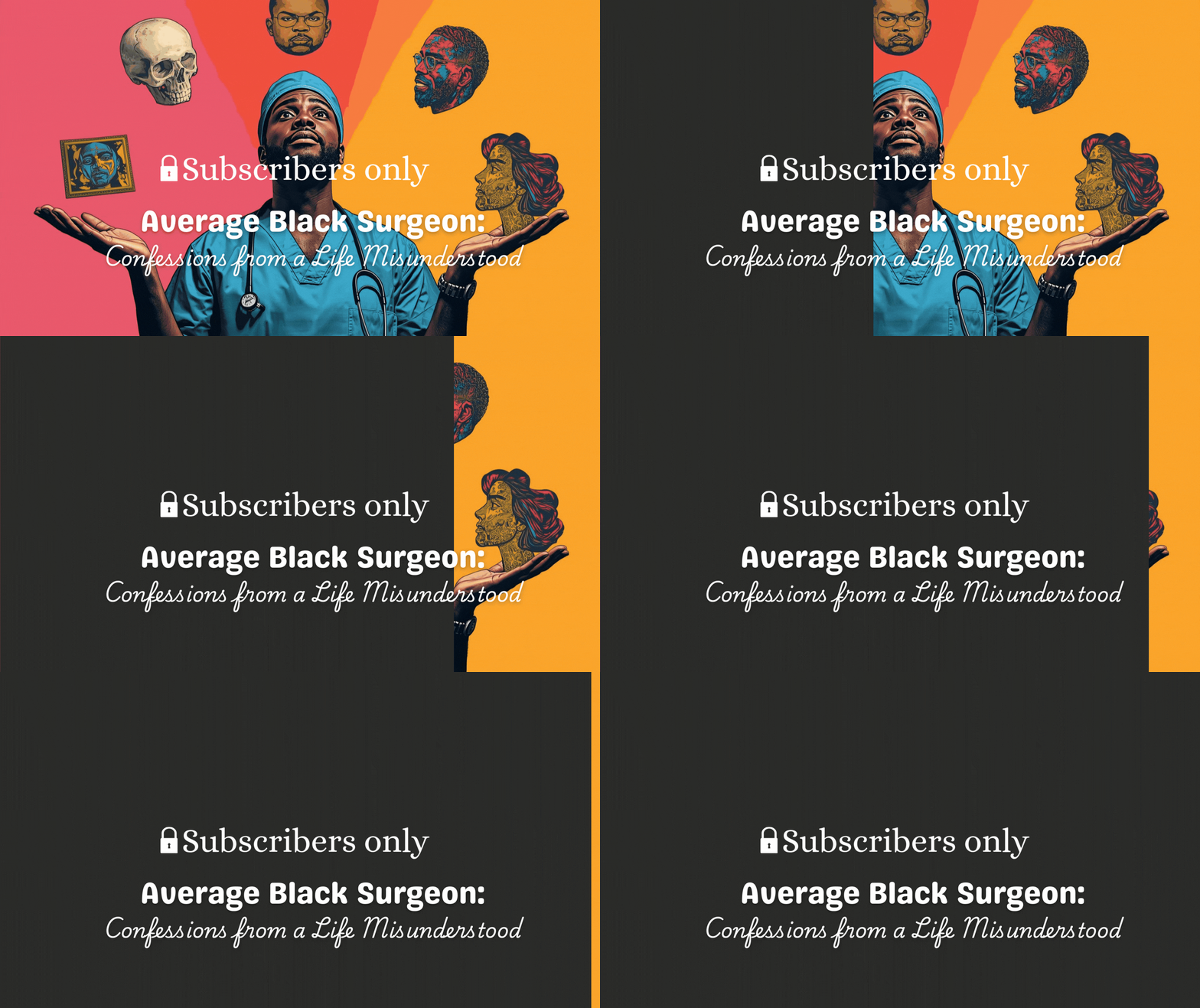
The Lessons of the Skin
I was a medical student with lesions I didn't recognise. The textbooks had no images of skin like mine. So I did the only thing left — I called my mother in Ghana.
I was a medical student when I first understood what it feels like to be invisible inside a consulting room.
Not invisible in the way that patients sometimes describe — overlooked, rushed, dismissed. Something different. Something that took me years to find the right words for. I was visible as a case. I was invisible as a person. And the distance between those two things was larger than I had ever imagined.
It began with one lesion, then multiple.
Small. Round. Slightly raised. It appeared on my skin without warning or explanation, in the way that things appear when you are twenty-three and studying medicine and already primed to catastrophise every symptom you encounter. I noticed it and felt the particular dread that medical students know well — the dread of knowing just enough to frighten yourself, and not nearly enough to be reassured.
I made an appointment and went to the GP surgery. My frame filled the small waiting room. I sat and waited, running through differentials in my head, doing what you do when you have been trained to think in patterns and lists.
I was not prepared for what happened next.
The GP examined the lesion carefully. Called in a colleague. They stood over me together, exchanging glances, speaking in lowered voices. I could sense their interest quicken. The lesions were unusual to them — a presentation they had not encountered before, something outside the comfortable margins of their pattern recognition. They began to discuss it with the particular energy of clinicians encountering something they find genuinely interesting.
What I registered, sitting there on the examination couch, was something I could not quite name in the moment. I was an interesting case. A clinical curiosity. The subtle excitement in their voices was real, and it was not unkind, but it was unmistakable. They were engaged with the lesion in a way they were not engaged with me. My fear, which was sitting directly in front of them, went largely unacknowledged. My uncertainty, which I had walked through the door carrying, did not register in their conversation. I had become a specimen. Briefly, quietly, without anyone intending it, I had stopped being a human being in that room.
I left with a referral to dermatology. One week's wait.
The walk home was cold. Twenty-six minutes on the tube, the city streets quiet in the early morning. I arrived back at the flat and did what any medical student would do: I picked up a textbook.
I turned the pages looking for myself. For an image that matched what I had seen on my own skin. For something that would anchor the fear to something knowable.
Nothing matched.